

Wireless Chargers







Say Goodbye to Damaged and Tangled Cables: How to Choose the Best Wireless Charger
In the era of technology, where every new gadget simplifies our daily life, one thing remained unchanged - charging cables. Perhaps you all recognize this scene: a damaged cable that sometimes charges, sometimes doesn't, so-called "tricking". Fortunately, wireless chargers offer to solve this problem once and for all. This is not just another technological novelty; it is a comfort that will make your life easier.
In this article, we will answer all the questions you might have regarding these modern accessories and help you find a phone wireless charger that perfectly fits your requirements.
What Is a Wireless Charger and How Does It Work? (Qi Technology)
Many think that a wireless charger is some kind of magical technology, but in reality, it works on the principle of electromagnetic induction.
Almost every modern wireless charger uses the so-called Qi standard. This is an international standard that suggests that phones of different brands (for example, Samsung, Apple, Xiaomi) be compatible with any Qi-certified charger.
The process is as follows: a coil in the charger platform connected to a power source creates an electromagnetic field; a second coil built into the phone's back housing captures this energy and converts it into electrical energy that charges the battery.
How to Choose the Best Wireless Charger: 5 Tips You Should Consider
The market is full of different models, so making the right choice can be difficult. Here are 5 main factors to consider before buying a wireless charger:
1. Power (Watts) - This is the most important factor. Power indicates how fast your device will charge.
Choose a charger that is at least 10W so that the charging process doesn't drag on. However, keep in mind that your phone will only receive as much energy as it supports. A 15W charger will still charge an iPhone at 7.5W.
2. Design and Shape
Wireless chargers come in two main shapes:
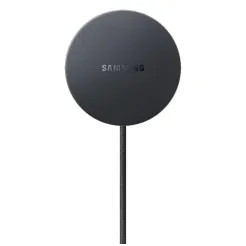
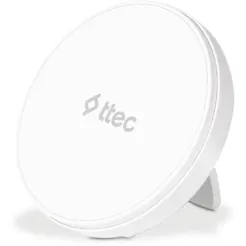
Platform (Pad): A flat surface on which you place the phone horizontally. Compact and ideal for a bedside table.
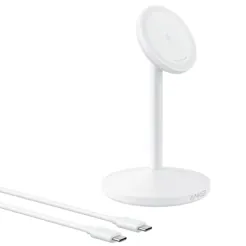
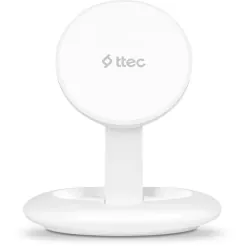
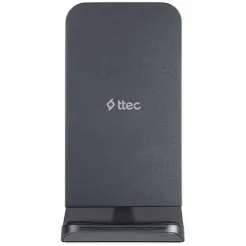
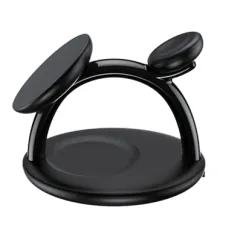
Stand: The phone stands vertically or tilted. This allows you to use Face ID, watch videos, or see notifications even during the charging process.
3. Charging Multiple Devices Simultaneously
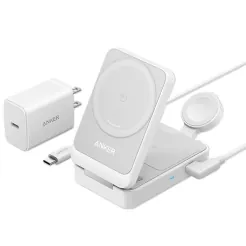
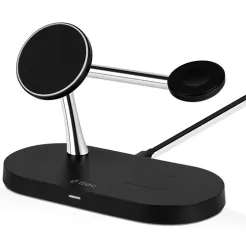
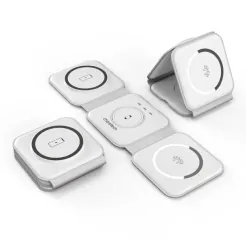
A multifunctional (3-in-1) wireless charger is the best choice for Apple users. You can simultaneously charge an iPhone (7.5W), Apple Watch, and AirPods.
4. Does the Case Hinder the Charging Process?
A wireless charger transmits energy through almost all standard thickness (3-5 mm) cases. However, if your case is overly thick or you have cards on the back, charging may be hindered or not happen at all.
5. Safety Mechanisms
A quality charger always has:
Overheat protection: Automatically reduces charging speed if the device gets too hot.
Foreign Object Detection (FOD): If a metal object (e.g., keys, coins) other than the phone lands on the platform, the charger automatically turns off, which rules out overheating and damage.
Frequently Asked Questions Regarding Wireless Chargers
- Do wireless chargers damage the phone battery?
No, if you use a quality, certified (Qi) wireless charger. Modern chargers and phones are equipped with smart chips that constantly monitor temperature and energy supply. As soon as the battery reaches 100%, the charger automatically stops energy transmission. - “I use a wireless charger, but it charges too slowly, why?”
There can be several reasons:
- Low charger power, for example, if you use a 5W charger.
- Phone coils must match the charger coils exactly. If the phone is slightly tilted, this will hinder the charging process. (That is why stand-type chargers are often more effective).
- A thick case increases the energy transmission distance and causes a reduction in charging speed.
- Always use a fast charger adapter; if the wireless charger is 15W but the adapter is only 5W, the phone will charge slowly too.
- Where can I find a wireless charger cheaply and on installments?
You can purchase a wireless charger cheaply and with internal interest-free installments on Kontakt.ge - Is there a fully portable wireless charger?
Yes! There are two types of portable options:
- Power Bank that has a wireless platform. You can carry it with you and charge the phone without a cable at any time; it is especially convenient when traveling.
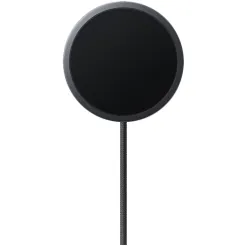
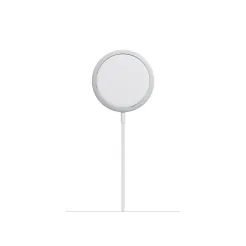
- MagSafe charger (for iPhone): This magnetic charger sticks to the back housing of the iPhone and charges it. Its portable versions mostly perform the function of a small Power Bank that you can always carry with you.
Wireless Charger - More Than Comfort
If you are looking for reliability, simplicity, and aesthetics, this is the accessory that is definitely worth buying.
At Kontakt, you can purchase not only chargers but also other small or large household appliances - for example, laptops, phones, tablets, headphones, smartwatches. Our goal is to make any purchase as comfortable and simple as possible for you.
Purchase a wireless charger today and enjoy technological comfort!
Frequently Asked Questions

Which mobile phones are compatible with wireless charging?
Wireless charging works with all smartphones that support the Qi standard. Most flagship models from Apple, Samsung, and other major brands released in recent years include this feature.
What is the difference between a MagSafe charger and a standard wireless charger?
The primary differences are magnetic alignment, charging speed, and user convenience. MagSafe ensures perfect alignment via magnets and provides faster, 15-watt charging for compatible iPhones. Standard wireless chargers lack magnets and are generally slower.
Can I charge multiple devices simultaneously with one wireless charger?
Yes, but this depends on the charger's design. Only specific multi-device stations with multiple induction coils can do this. Keep in mind that the charger distributes power between devices, so using a sufficiently powerful wall adapter is essential.
Does using a wireless charger damage the phone's battery?
Not if used correctly. Modern wireless chargers have built-in safety mechanisms that automatically cut power once the battery is full or if the device begins to overheat.
Does a wireless charger require a special power adapter?
Yes, a power adapter with adequate wattage is necessary for efficient performance. If the adapter provides less power than the wireless charger requires, the device will charge very slowly or may not charge at all.